How Much Does Pressure Washing a Driveway Cost? The Complete Pricing Guide
Driveways endure more daily wear and tear than almost any other exterior feature of a residential property. Between automotive fluids, tire rubber, weed growth in expansion joints, atmospheric fallout, and regional soil staining, concrete and pavers quickly lose their original luster. A dingy, stained driveway drags down curb appeal and can even create slipping hazards when algae flourishes in humid weather. Homeowners planning exterior maintenance frequently ask: how much does pressure washing a driveway cost?
On a national average, professional driveway pressure washing ranges between $150 and $450 for a standard residential property. Most professional contractors charge by the square foot, typically billing between $0.20 and $0.45 per square foot, depending on the driveway layout, construction material, level of organic buildup, and surface staining. While basic dirt and mild mildew rinse off quickly, deeply embedded motor oil or regional iron-rich red clay require specialized chemistry and hotter water, shifting overall service pricing.
Understanding the underlying variables that determine contractor bids helps property owners plan exterior maintenance budgets effectively while avoiding low-cost operators who risk etching or ruining concrete surfaces with improperly calibrated equipment.
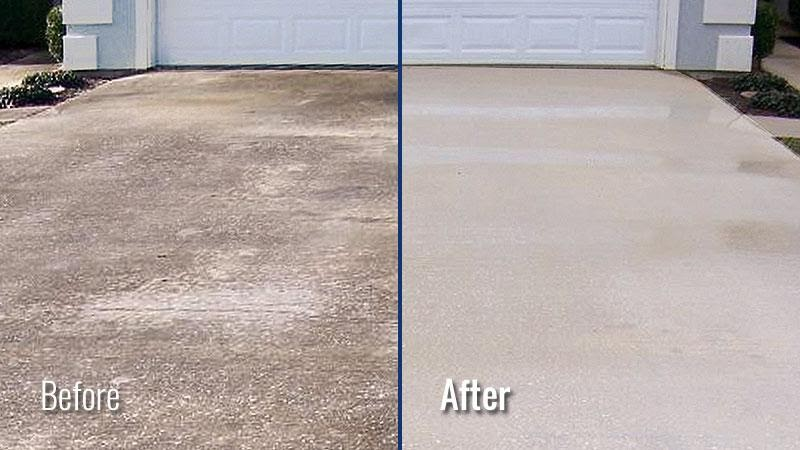
Driveway Pressure Washing Cost Breakdown at a Glance
The following reference table provides a structured cost overview across typical residential driveway dimensions, surface materials, and specialized stain treatments:
| Driveway Size & Scope | Estimated Square Footage | Average Professional Cost Range | Average Duration | Key Cost Factors |
| Small (1-Car Driveway) | 200 to 400 sq. ft. | $100 to $175 | 1 to 1.5 hours | Minimum service call fees, basic surface prep |
| Medium (2-Car Driveway) | 400 to 800 sq. ft. | $175 to $325 | 1.5 to 2.5 hours | Edge detailing, expansion joint cleaning, light mildew |
| Large (3-Car / Circular) | 800 to 1,500+ sq. ft. | $325 to $650+ | 3 to 5 hours | Total square footage, water access distance, slope |
| Interlocking Paver Driveway | 600 to 1,000 sq. ft. | $350 to $700 | 3 to 6 hours | Low-pressure rotary washing, joint sand preservation |
| Specialty Stain Treatment | Per affected zone / stain | +$50 to $150 add-on | +30 to 60 minutes | Degreasers, hot water units, acid-free red clay neutralizers |
1. Square Footage: The Primary Pricing Driver
Driveway dimensions represent the main baseline for contractor estimates. Surface area directly dictates the labor time, volume of water, and chemical surfactants required to execute a uniform, streak-free wash.
Square-Foot Pricing Models
Most exterior cleaning contractors apply tiered square-foot rates:
- Small Areas (under 400 square feet): Contractors often quote near the top of the range ($0.35 to $0.50 per square foot) or charge a flat minimum trip charge, usually between $100 and $150. This base fee covers transit, equipment setup, hose staging, and fuel expenses.
- Mid-Sized Areas (400 to 1,000 square feet): Rates generally average between $0.22 and $0.35 per square foot.
- Large Residential Estates (1,000+ square feet): The price per square foot often drops closer to $0.18 to $0.25, as commercial-grade rotary surface cleaners cover wide, open slabs quickly once the staging setup is complete.
2. Surface Material and Construction Types
The substrate material of your driveway plays a major role in determining equipment selection, appropriate pressure thresholds, and overall labor costs.
Poured Concrete
Standard brushed or smooth-troweled concrete is the most common driveway surface. While concrete appears indestructible, newly cured or unsealed slabs can be permanently damaged by excessive pressure. Professionals clean concrete using high-flow rotary surface cleaners operating between 2,500 and 3,500 PSI. Cleaning standard concrete is typically the most budget-friendly option per square foot because wide flat-surface disk cleaners can glide smoothly across uninterrupted spans.
Interlocking Concrete Pavers
Paver driveways require delicate care. Blasting pavers with high-pressure wand tips will dislodge the underlying bedding sand, blow out joint sand, and cause pavers to settle unevenly.
- Contractors must calibrate their equipment to moderate pressure levels and use specialized rotating surface cleaners.
- Cleaning pavers often costs 20% to 40% more than flat poured concrete due to the added labor required to protect joint sand.
- If joint sand washes away, re-sanding with polymeric sand adds an additional $0.50 to $1.25 per square foot to the total invoice.
Exposed Aggregate and Decorative Stamped Concrete
Exposed aggregate surfaces feature embedded decorative pebbles, while stamped concrete relies on textured impressions and colored topical sealers.
- High pressure can dislodge loose stones from aged aggregate or strip clear acrylic coatings from stamped patterns.
- Cleaning these surfaces requires lower pressure paired with targeted biological detergents to loosen embedded dirt before a gentle rinse, increasing labor time and material costs.
Asphalt
Asphalt driveways cannot tolerate intense pinpoint pressure. High water pressure tears into asphalt binders and loosens aggregate stones. Cleaning asphalt requires broad fan tips, low pressure, and specialized petroleum-safe detergents to lift surface grime without deteriorating the tar matrix.
3. Stain Types and Soil Chemistry: Why Upstate Properties Need Extra Care
Evaluating how much does pressure washing a driveway cost involves assessing more than square footage; the type of stains embedded in the surface significantly alters the scope of work. Mild surface dust rinses away easily, but chemical and mineral stains require specific chemical processes.
Organic Algae, Lichen, and Mold
In shaded or high-humidity regions, organic growth settles deep into the microscopic pores of concrete. Simply blasting algae with cold water strips the visible surface layer but leaves root structures alive inside the pores, causing green or black staining to return within weeks. Professional services apply eco-friendly algaecides and surfactants that neutralize spores at the root before washing, ensuring longer-lasting results.
Automotive Petroleum, Grease, and Transmission Fluids
Motor oil penetrates deep into porous concrete within hours. Cold water cannot emulsify oil; it simply spreads the petroleum slick across a wider area. Lifting oil requires:
- Commercial-grade alkaline degreasers that break down hydrocarbon bonds.
- Extended dwell time to draw embedded oils to the surface.
- Hot-water pressure washing rigs heating water to 180°F to 200°F to melt and flush grease.
Treating established automotive stains typically adds $50 to $125 to a project estimate.
Red Clay and Rust Staining
In regions across the Southeast, including Upstate South Carolina, native red clay contains high concentrations of iron oxide. When red clay runoff sits on unsealed concrete, the iron binds chemically with the cement paste, creating stubborn orange and rust-colored stains.
- Standard pressure washing alone cannot remove iron oxide stains. Blasting red clay with excessive pressure will etch the concrete cream layer long before the orange stain lifts.
- Eliminating clay and fertilizer rust requires specialized, acid-based restoration chemicals that chemically reverse iron oxidation.
- Because rust and red clay removal requires hand-applied specialty chemicals and careful neutralization, contractors price these treatments as custom add-ons.
Property owners interested in learning how environmental factors impact water runoff and exterior surfaces can review resource materials from the U.S. Geological Survey on Water Science and Runoff, which outlines how soil composition, mineral deposits, and surface runoff interact with built environments.
4. Professional Pressure Washing vs. DIY Equipment Rental
Homeowners comparing service quotes frequently consider renting a pressure washer from a local hardware center. While doing it yourself appears less expensive up front, comparing real costs and equipment capabilities reveals important tradeoffs.
The Limitations of Consumer Rental Units
Rental units found at home improvement centers generally produce 2,500 to 3,000 PSI but deliver only 2.0 to 2.5 Gallons Per Minute (GPM) of water flow. In professional surface cleaning, water volume (GPM) is far more critical than raw pressure (PSI). Low GPM forces the operator to rely on narrow, high-impact wand tips, sweeping back and forth across hundreds of square feet.
This narrow wand pattern almost inevitably leads to “zebra striping,” where uneven passes leave alternating bands of clean and dirty concrete etched across the driveway. Furthermore, high-pressure consumer wands can easily strip the finished top layer off concrete, exposing coarse aggregate that cannot be repaired without resurfacing.
The Professional Advantage
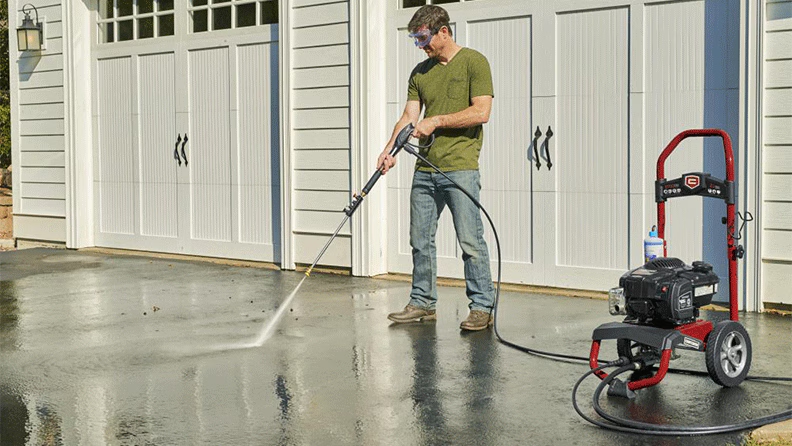
Professional exterior contractors use commercial-grade trailer rigs that produce 5.0 to 8.0+ GPM. High water volume allows the technician to pair the machine with balanced rotary surface cleaners. Dual or triple spinning nozzles enclosed inside a circular aluminum housing clean a uniform 20- to 28-inch path in a single pass.
Homeowners who want their property restored safely and efficiently can turn to experienced exterior surface specialists. Exploring professional pressure washing and driveway cleaning services through licensed providers like Clean Verde guarantees uniform surface restoration backed by full commercial liability insurance and plant-safe cleaning agents.
5. How to Save on Driveway Pressure Washing Costs
Property owners can take simple, practical steps to keep their driveway cleaning projects on budget:
- Bundle Exterior Services: Exterior cleaning companies incur travel and staging expenses for every visit. You can often save 15% to 25% overall by bundling driveway washing with complementary services like house soft washing, gutter cleanouts, or roof treatments during the same service appointment.
- Clear Vehicles and Obstacles Ahead of Time: Relocating parked cars, basketball hoops, trash cans, and potted plants before the crew arrives reduces prep labor, allowing technicians to start washing immediately.
- Maintain Clear Water Access: Ensure your exterior hose bibbs provide steady water pressure and clear hose paths so technicians can connect their water supply tanks without delays.
- Apply Concrete Sealers Post-Clean: Once your driveway is fully cleaned, consider applying a penetrating silane-siloxane concrete sealer. Sealers lock out water, motor oil, and organic growth, reducing subsequent cleaning frequency from once a year to once every three years.
Restoring Value and Cleanliness to Your Home
Understanding how much does pressure washing a driveway cost helps homeowners make informed maintenance investments that enhance neighborhood curb appeal, prevent slip hazards, and protect concrete from long-term deterioration. By considering driveway dimensions, construction materials, and the presence of stubborn oil or mineral stains, property owners can select qualified exterior cleaning teams who deliver clean, lasting results without risking surface damage.